Thousands of Katy-area homeowners who flooded during Hurricane Harvey moved closer to compensation after the federal government decided not to ask the U.S. Supreme Court to review the Addicks and Barker reservoir case.
The decision, reported by KPRC 2 on Monday, Sept. 7, ends years of appeals and locks in a federal court ruling that the government's flooding of private property amounted to an unconstitutional taking. Attorney Daniel Charest, a partner at Burns Charest LLP and co-lead counsel for the upstream homeowners, said the government "has effectively conceded" that the Federal Circuit's ruling "is the final rule of the law for all of the upstream cases."
No statement from the Department of Justice explaining the decision not to seek Supreme Court review appears in public records as of publication.
What the courts found
A three-judge panel of the U.S. Court of Appeals for the Federal Circuit ruled unanimously in late December 2025 that the government knew, or should have known, that the Addicks and Barker dams would cause damage to private property, according to Houston Public Media. The ruling applied directly to six test-case homeowners but opened the door for several thousand others whose claims had been stayed pending the appeal.
The court found that property ownership includes the right to exclude floodwaters unless the government lawfully acquires that right. When the U.S. Army Corps of Engineers built the dams to protect downtown Houston, it did not purchase all land that could be inundated during large storms, a choice the Federal Circuit called deliberate, according to a legal analysis by Marzulla Law.
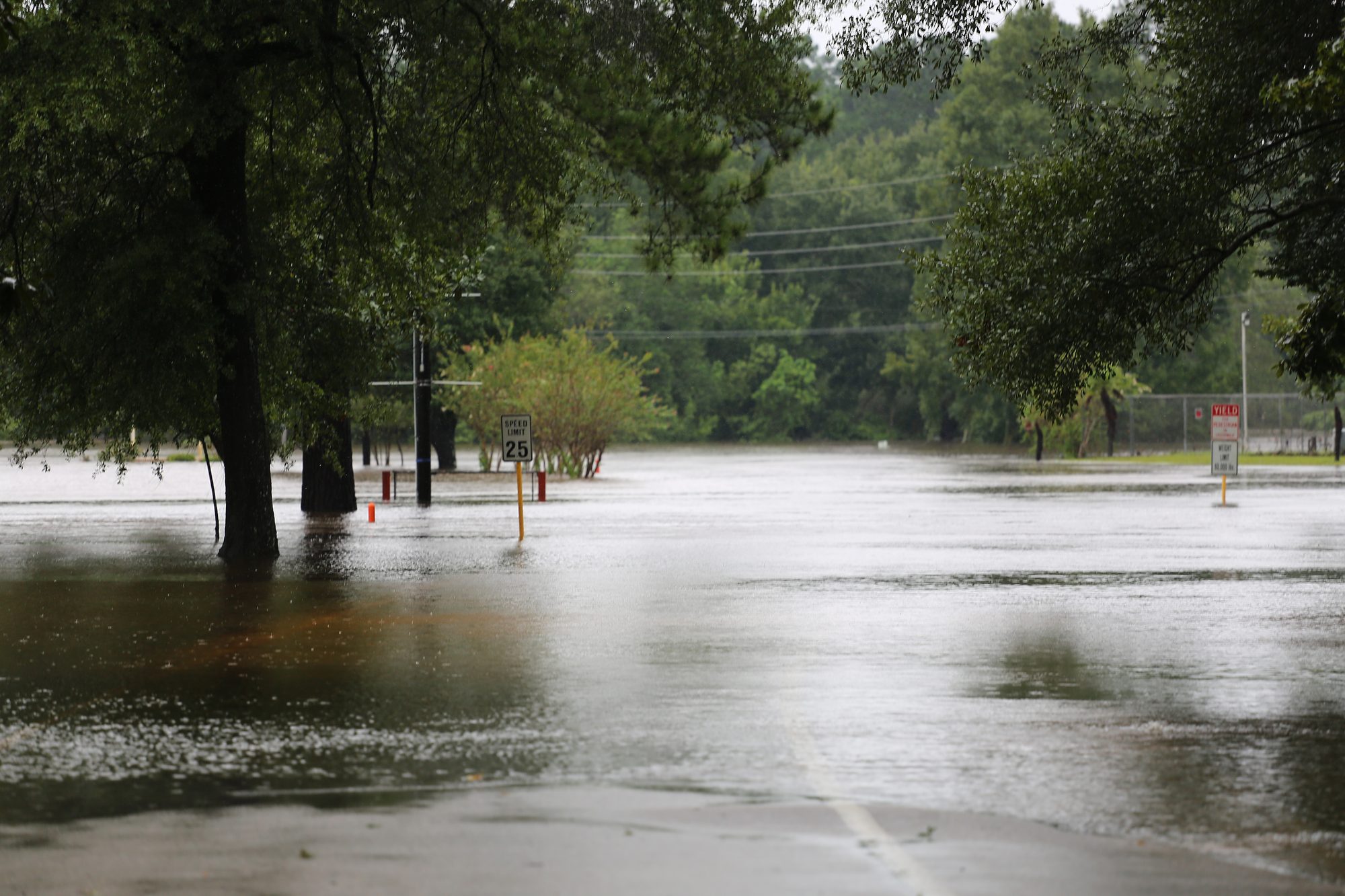
During Harvey in August 2017, the reservoir pools crested at record levels of 109.1 feet in Addicks and 101.6 feet in Barker, sending water onto private properties across west Houston and the Katy area. Affected neighborhoods include Cinco Ranch, Kelliwood, Canyon Gate, Grand Lakes and Mayde Creek Farms, among others.
The Willow Fork Drainage District, which covers several of those communities, held a series of town hall meetings at Katy-area venues in 2022 and 2023 to inform residents about the litigation and the deadline to file claims. That deadline passed on Aug. 28, 2023.
Settlement formula in the works
Charest said attorneys and government experts spent the summer of 2026 developing a settlement framework. The proposed process would sort homes into categories and calculate individual offers based on factors such as flood depth, ground-floor size, home age and pre-storm condition. Insurance payments already received could reduce awards.
The formula must clear the DOJ's internal approval process. Charest's best-case estimate for having the framework resolved is the first quarter of 2027. That timeline covers the formula, not checks in hand. Each homeowner would then receive an individual offer and decide whether to accept or keep pursuing the case in court.
Attorney Vuk Vujasinovic of VB Attorneys, one of the court-appointed counsel, has estimated that 10,000 to 12,000 properties carry the permanent flowage easement and that total claimed damages exceed $1 billion. Test-case homeowners averaged compensation of up to about $300,000 each, including interest accruing from August 2017, according to plaintiff attorneys' estimates. Individual awards will vary.
What homeowners can't recover
The Federal Circuit did narrow the scope of compensation. The court vacated certain awards for lost rental income and displacement costs, ruling those fall outside just compensation under the Fifth Amendment's Takings Clause.
The human toll, meanwhile, stretches beyond dollar figures. Gary Cravens, 70, who has lived near the reservoirs for nearly three decades, said nine years after the storm about 10 electrical fixtures in his home still do not work and his yard remains uneven. His next-door neighbor, Billy Sorrells III, said his family has spent roughly $75,000 on continuing repairs since Harvey and that his father, Bill Sorrells Jr., suffered an aneurysm and died about a week after the storm.
Homeowners who already filed claims must still show their individual cases fit the legal framework the test cases established before receiving an offer.