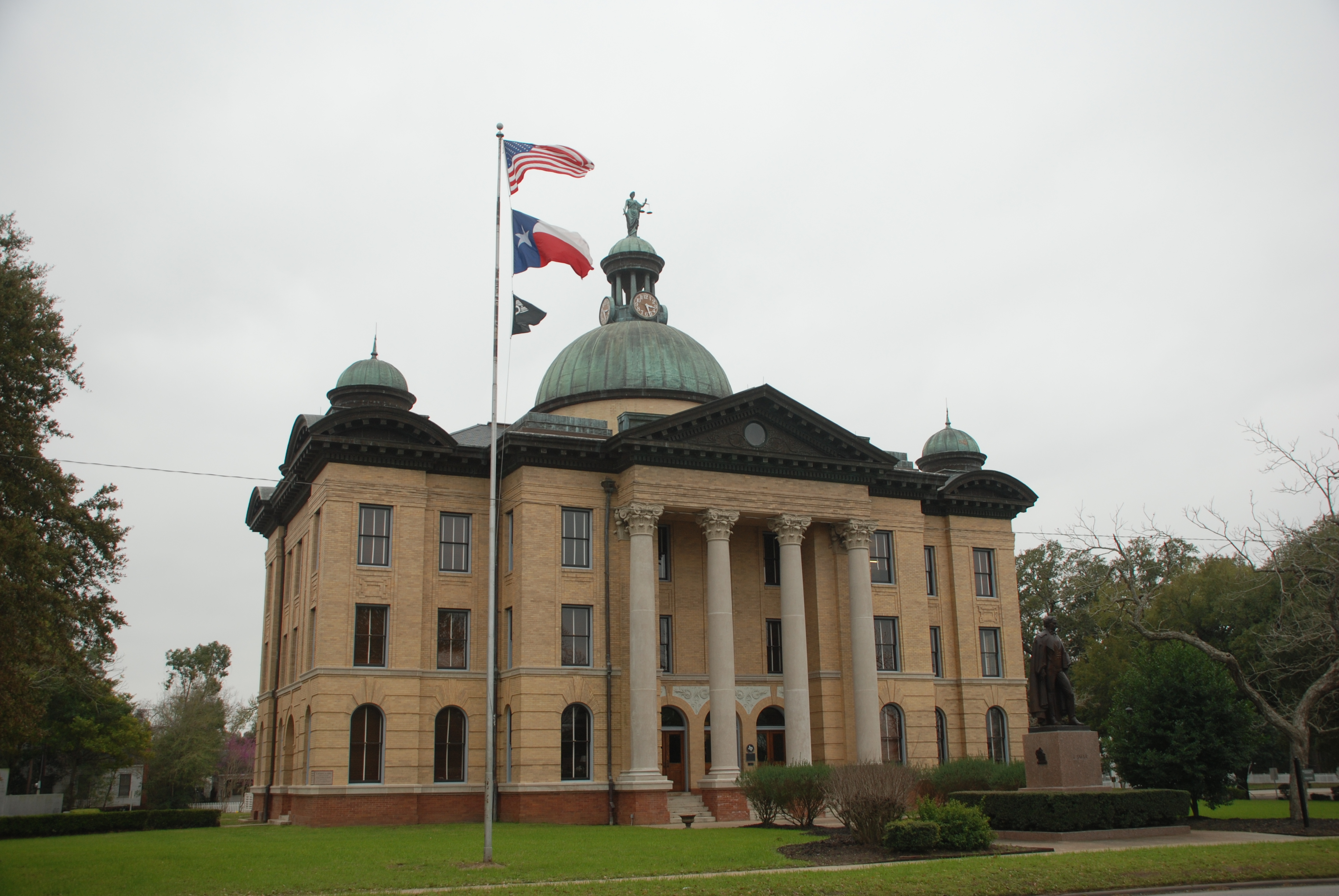
Fort Bend County commissioners on Thursday, Oct. 8, got their first public look at Tesla's proposed $10.1 billion solar plant near Needville. The project could bring nearly 10,000 permanent jobs and reshape the tax base for Lamar CISD families in the Katy and Fulshear area.
The project, code-named Project Crystal Sun, would occupy about 1,600 acres near FM 762 and FM 1994 in the Austin Point area. Tesla plans to manufacture solar cells and assembled solar modules there, not operate a data center, as Covering Katy News first reported.
Precinct 4 Commissioner Dexter McCoy said residents had raised data center concerns at town hall meetings and at the Fort Bend County Fair Parade. He asked the question directly at the workshop.
"Project Crystal Sun is not a data center. It is a manufacturing facility," a representative of Kroll, the financial advisory firm presenting the economic analysis, told commissioners.
What the numbers show
Tesla's proposal calls for about $10.1 billion in capital investment. Roughly $1.5 billion would go to real property and $8.6 billion to equipment. The company projects 9,712 permanent jobs by 2033, with an annual payroll of approximately $1.3 billion at full operation, according to Tesla's application under the state's Jobs, Energy, Technology and Innovation Act (JETI).
About 1,100 construction workers would be needed during peak building. If the Fort Bend site is selected, construction would run from 2026 to 2028, with commercial operations beginning in early 2029.
Tesla has not made a final site decision. Site-selection adviser David Dennison told Lamar CISD trustees in September that competition had narrowed to two locations, one in Texas and one out of state, and that the rival site had assembled a "very compelling package," according to the Houston Chronicle. Tesla hopes to decide before the end of 2026.
Lamar CISD tax incentive already advancing
Lamar CISD trustees voted 7-0 on Sept. 15 to advance a taxable value limitation agreement with Tesla under the JETI Act. The deal would tax Tesla's qualifying property at 50% of its value for the district's maintenance-and-operations rate from 2029 through 2038.
The Texas Comptroller's office estimates the break would save Tesla about $115.2 million over 20 years. The project would still generate an estimated $153 million in Lamar CISD taxes with the incentive, compared to $268.3 million without it, Houston Public Media reported.
Lamar CISD Superintendent Roosevelt Nivens told trustees at the Sept. 15 meeting that the state would backfill any lost operating revenue. CFO Greg Buchanan said the agreement could generate $335.5 million in interest-and-sinking tax revenue through 2063 and add $180.3 million in bond capacity, ABC13 reported.
Not everyone supported the deal. Parent Daniel Saffron called the project "a wolf in sheep's clothing" at the Sept. 15 public hearing. Parent Jennifer Rodriguez cited concerns about proximity to Brazos Bend State Park.
The governor's review of the JETI application was still pending as of the Oct. 8 workshop.
County pitch, no vote yet
Precinct 3 Commissioner Andy Meyers told the Kroll representative he could "personally assure" Tesla that Fort Bend County's site was better than the competing location.
The Oct. 8 session was informational only. No vote was taken, and no date for a formal county decision on incentives has been announced. Commissioners Court established a reinvestment zone in the Austin Point area on Aug. 24, a required step before the county can consider economic development incentives. Interim County Judge Daniel Wong recused himself from that vote, citing a conflict of interest involving his engineering firm, Tolunay-Wong Engineers, Inc.